Chao Chen
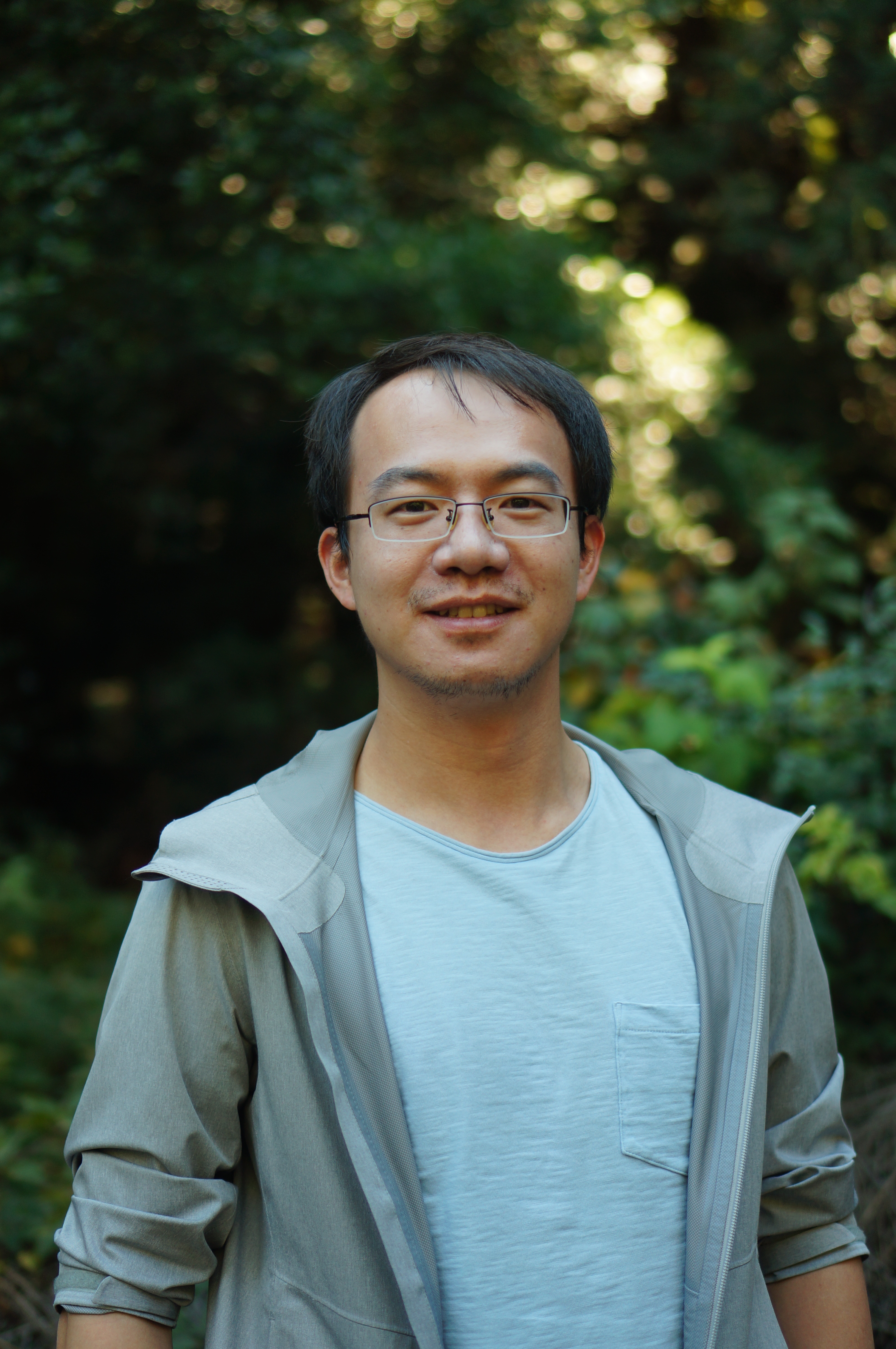 |
Assistant Professor Contact: chao_chen@ncsu.edu |
About me
Before joining NC State, Chao Chen was a postdoctoral researcher at the Oden Institute for Computational Engineering and Sciences at The University of Texas at Austin, working with George Biros and Per-Gunnar Martinsson. He received his PhD in 2018 Stanford University's Institute for Computational and Mathematical Engineering (ICME), advised by Eric Darve.
Chao has held research internships at NVIDIA Research (2018), Sandia National Laboratories’ Center for Computing Research (2015-2017), and Lawrence Livermore National Laboratory's Computational Materials Science Group (2013).
Recent News
[Oct 2026] Paper “Validation-to-Test Transfer of Post-Hoc Compression for Efficient Vision-Language Retrieval” by Jiaying Ye (University of Sheffield), from her 2026 Summer GEARS project in my group, accepted at IEEE ETECOM 2026.
[Aug 2026] Paper “Numerically Stable Cholesky-QR on GPU via Mixed-Precision Randomized Preconditioning” with James Garrison and Ilse Ipsen accepted at IEEE HPEC 2026 and recognized as an Outstanding Student Paper.
[Aug 2026] Paper “Tackling Parallelization Challenges of Randomized Preconditioners With Dependency Tracking” accepted at SC26, the International Conference for High Performance Computing, Networking, Storage, and Analysis.
[Jul 2026] New work “Adaptive, Matrix-Free Low-Rank Approximation” is available arXiv.
[Jun 2026] Served on the program committee for IEEE Cluster in the Algorithms and Applications area/track.
[May 2026] Co-organized a Minisymposium “Hierarchical Low-Rank Approximations: Algorithms and Applications” with Arvind Saibaba at 27th Conference of the International Linear Algebra Society (ILAS 2026).
[Apr 2026] Talk at Applied Math Seminar (online) at University of Arkansas.
[Mar 2026] Yu Li (University of Nottingham Ningbo China) and Xiangzhe Wang (The Chinese University of Hong Kong, Shenzhen), whom I mentored on “Adaptive Stopping Rule for Power Iteration in Randomized SVD” in the 2026 Winter GEARS program, won first place in the GEARS poster competition.